Why Private Marketplaces Beat Public Ones for Community Selling
Discover why private, community-based marketplaces outperform public platforms like Facebook Marketplace and Craigslist for safety, trust, and selling success.

If you have ever tried to sell something on Facebook Marketplace or Craigslist, you already know the drill. You post an item, field dozens of messages from strangers, negotiate with lowballers, arrange a meetup in a parking lot, and then watch half your buyers ghost you at the last minute. For many people, the experience is frustrating enough to make them give up on selling altogether.
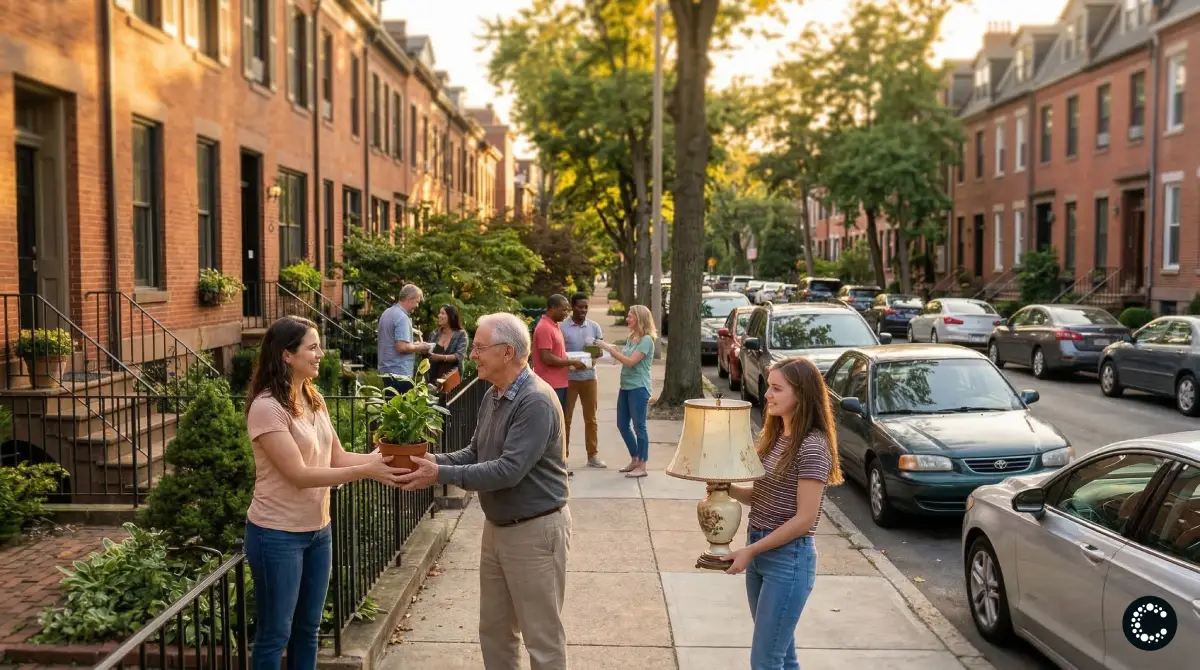
There is a better way. Private marketplaces, platforms scoped to a specific community rather than the general public, are quietly changing how people buy and sell. They replace anonymity with accountability, strangers with neighbors, and chaos with trust. In this post, we will break down exactly why private marketplaces outperform their public counterparts for community selling, and how you can create one for your own group in minutes.
The Problem with Public Marketplaces
Public marketplaces like Facebook Marketplace, Craigslist, OfferUp, and Letgo were built on a simple premise: connect as many buyers and sellers as possible. The bigger the audience, the faster things sell. In theory, that logic holds up. In practice, scale creates problems that undermine the entire selling experience.
Scams and Fraud Are Rampant
The Federal Trade Commission reported that consumers lost over $2.7 billion to social media and online marketplace scams in recent years. Public marketplaces are magnets for fraudsters because the barrier to entry is effectively zero. Anyone can create an account, post a listing, and disappear after collecting payment.
Common scams include fake payment confirmations, counterfeit goods listed as authentic, bait-and-switch tactics where the item shown in photos is not the item delivered, and overpayment schemes designed to extract money from the seller. Even experienced users fall victim because there is no reliable way to verify who you are dealing with.
No-Shows and Ghosting Waste Your Time
According to surveys of marketplace sellers, nearly 40 percent of arranged meetups end in a no-show. Buyers agree to a time and place, then simply never appear. Because public marketplace users face no consequences for flaking, there is no incentive to follow through. The seller is left sitting in a parking lot, item in hand, wondering what went wrong.
Lowballers Dominate the Conversation
On public platforms, the first message you receive is almost always an offer well below your asking price. This is not negotiation; it is a volume strategy. Lowballers send the same "$5?" message to dozens of listings, hoping someone will bite. For sellers, it means sifting through junk offers to find legitimate buyers.
Safety Concerns Are Real
Meeting strangers from the internet to exchange goods and cash introduces genuine safety risks. Police departments across the country have set up designated "safe exchange zones" in their parking lots specifically because marketplace meetups have led to robberies and assaults. The fact that law enforcement had to create infrastructure to make marketplace transactions safer tells you everything you need to know about the state of public selling platforms.
What Makes a Marketplace "Private"
A private marketplace is not simply a marketplace with a login screen. It is a platform where membership is tied to a real-world community, and where that community connection creates natural boundaries around who can participate.
Membership and Verification
In a private marketplace, you do not just sign up with an email address. Access is controlled. Members might be verified through their apartment building, their employer, their university, their neighborhood association, or their hobby group. This verification step ensures that every participant has a real identity tied to the community.
Community Boundaries
Private marketplaces are scoped to a defined group. When you list an item in your apartment building's marketplace, only your neighbors see it. When you post in your company's internal marketplace, only your coworkers can browse and buy. These boundaries are not limitations. They are features that fundamentally change the dynamics of buying and selling.
Reputation That Matters
On a public marketplace, a bad review from a stranger carries little weight. On a private marketplace, your reputation follows you within a community you care about. If you flake on a sale in your apartment building, you will see that person in the elevator. This social accountability is the single most powerful trust mechanism available.
Benefits of Private Marketplaces
The structural differences between private and public marketplaces produce measurable advantages across every dimension that matters to buyers and sellers.
Higher Trust, Better Completion Rates
When you know who you are dealing with, transactions actually happen. Private marketplace operators consistently report completion rates above 80 percent, compared to the roughly 60 percent seen on public platforms. The reason is simple: people follow through on commitments when the other party is someone they will see again.
Accountability Eliminates Bad Behavior
Lowballing, ghosting, and scamming are rational strategies when you are anonymous and face no consequences. They become irrational when your behavior is visible to your community. A coworker is not going to send you a "$5?" message on a $200 item because they will have to face you at the next team meeting.
Relevance Over Volume
Public marketplaces optimize for volume. They show you thousands of listings, most of which are irrelevant to your needs or too far away to be practical. Private marketplaces optimize for relevance. Every listing comes from someone in your community, which means the items are nearby, the context is shared, and the logistics are simple.
Safety Through Familiarity
When the buyer is your downstairs neighbor or a colleague from the third floor, the safety calculus changes entirely. There is no need to meet a stranger in a parking lot. Transactions happen in lobbies, break rooms, and doorsteps. The community itself provides the safety infrastructure that public marketplaces cannot offer.
Better Prices for Sellers
Sellers on private marketplaces typically achieve higher sale prices than on public platforms. The reason ties back to trust: buyers in a private marketplace are willing to pay fair prices because they trust the seller, the item description, and the transaction process. The race-to-the-bottom pricing pressure that dominates public marketplaces simply does not exist when your buyer pool is a trusted community.
Types of Private Marketplaces
Private marketplaces work for any group with shared membership and mutual trust. Here are the most common configurations.
Apartment Buildings and Condos
Residential buildings are natural marketplace communities. Residents are constantly moving in and out, upgrading furniture, and decluttering. A building marketplace lets neighbors buy and sell without leaving the property. Moving out? List your couch and your neighbor three floors up claims it the same afternoon. No shipping, no meetup logistics, no strangers.
Companies and Workplaces
Corporate marketplaces give employees a trusted space to buy and sell among coworkers. From electronics to event tickets to baby gear, workplace marketplaces tap into a captive audience of verified professionals. They also serve as a community-building tool, giving colleagues a reason to connect outside of work tasks.
Universities and Campuses
College campuses have intense marketplace dynamics. Students arrive needing furniture, textbooks, and supplies. They leave needing to unload everything quickly. A campus marketplace solves both sides of this equation while keeping transactions within the trusted student community.
Neighborhoods and HOAs
Neighborhood marketplaces serve the same function as the community Facebook group where people post items for sale, but with better structure, search, and organization. Homeowner associations can use a private marketplace to give residents a dedicated space for local buying and selling.
Hobby Groups and Clubs
Collectors, hobbyists, and enthusiast groups often have specialized items that do not perform well on public marketplaces because the general audience does not understand their value. A private marketplace for a cycling club, a photography group, or a vintage audio community ensures that listings reach people who understand and appreciate what is being sold.
How Moderation Works in Private Marketplaces
One of the most common questions about private marketplaces is how they handle moderation. The answer is that community structure makes heavy-handed moderation largely unnecessary, but good tools are still important.
Community Self-Regulation
In a private marketplace, social norms do most of the moderation work. Members behave well because their reputation within the community is at stake. The same social pressure that prevents you from being rude to your neighbor in person prevents you from being a bad actor in the marketplace.
Admin Controls
Effective private marketplace platforms give community administrators control over membership, listings, and disputes. Admins can approve or remove members, flag inappropriate listings, and mediate disagreements. These controls exist as a safety net, not as a primary moderation mechanism.
Marketplace Types for Different Needs
Different communities need different levels of control. Some groups want a fully open marketplace where any member can post freely. Others want a moderated marketplace where listings are reviewed before going live. Still others want a strictly private marketplace where membership is by invitation only.
Cirkle supports five marketplace types to accommodate these varying needs: personal, public, moderated, private, and enterprise. Each type offers a different balance of openness and control, letting community leaders choose the configuration that fits their group. For more details on choosing the right type, visit our FAQ.
The Trust Equation: Why Private Marketplaces Win
Trust in a marketplace is not a single variable. It is a function of three factors: reputation, accountability, and community norms.
Reputation
In a private marketplace, your transaction history is visible to people who matter to you. A track record of fair dealing, honest descriptions, and reliable follow-through builds a reputation that makes future transactions easier. Unlike public marketplace reviews from anonymous strangers, private marketplace reputation is backed by real relationships.
Accountability
When the person you are transacting with is a member of your community, there are social consequences for bad behavior. This accountability is not punitive; it is structural. People naturally behave better when their actions are visible to their peers.
Community Norms
Every community has norms around fairness, communication, and reciprocity. Private marketplaces inherit these norms. A university marketplace reflects the culture of the campus. A workplace marketplace reflects the professionalism of the company. These existing norms create a baseline of expected behavior that public marketplaces cannot replicate.
The combination of reputation, accountability, and community norms creates a trust environment that no amount of platform-level verification, escrow services, or review systems can match. Trust is fundamentally a social phenomenon, and private marketplaces are fundamentally social platforms.
When Public Marketplaces Still Make Sense
Private marketplaces are not the right tool for every situation. Public platforms still have their place, and it is worth understanding when they are the better option.
Rare or Niche Items with Tiny Local Markets
If you are selling a vintage synthesizer or a specific car part, you may need the reach of a public marketplace to find a buyer. Private marketplaces optimize for relevance within a community, which means the audience is smaller by design. For items where the right buyer could be anywhere in the country, public platforms offer necessary reach.
High-Volume Commercial Selling
If you are running a business and selling hundreds of items per month, public marketplaces provide the volume you need. Private marketplaces are designed for community members selling to each other, not for commercial operations.
When You Do Not Belong to a Relevant Community
If you do not live in an apartment building, work at a company with a marketplace, or belong to a group that has one, a private marketplace is not available to you. In those cases, public platforms are your default option, though creating a marketplace for your community is easier than you might think.
How AI Makes Private Marketplaces Even Better
One of the barriers to listing items for sale is the effort involved. Writing a good title, crafting a compelling description, setting a fair price, and adding relevant tags takes time. Multiply that by a dozen items and the process becomes tedious enough to stop most people from bothering.
Modern private marketplace platforms solve this with AI-powered listing generation. On Cirkle, you simply upload a photo of your item, and the AI automatically generates a title, description, suggested price, and relevant tags. What used to take five minutes per listing now takes five seconds. This dramatically lowers the barrier to participation and ensures that marketplace listings are consistently well-structured and discoverable.
How to Create a Private Marketplace for Your Community
If you are convinced that a private marketplace is the right approach for your community, the next step is surprisingly simple. You do not need to hire a developer, set up a website, or manage infrastructure.
With Cirkle, you can create a marketplace for your community in minutes. The process works like this:
- Choose your marketplace type (personal, public, moderated, private, or enterprise) based on your community's needs.
- Invite your community members to join.
- Members start listing items using the AI-powered listing tool, which generates complete listings from a single photo.
- Buyers and sellers connect directly, with zero fees and zero commissions on any transaction.
The platform is mobile-first with a modern interface designed for the way people actually shop and sell today. There are no listing fees, no transaction fees, and no commissions. The marketplace belongs to your community.
The Shift Is Already Happening
The movement from public to private marketplaces mirrors a broader trend in how people use the internet. After two decades of everything being public and open, users are gravitating toward smaller, more intentional spaces. Private messaging replaced public status updates. Closed groups replaced open forums. And now, private marketplaces are replacing public selling platforms.
This shift is driven by a recognition that bigger is not always better. A marketplace with ten thousand strangers is less useful than a marketplace with one hundred people you trust. Relevance beats reach. Trust beats volume. Community beats anonymity.
If you are tired of the scams, no-shows, and safety concerns that come with public marketplaces, it might be time to try a different approach. Create a private marketplace for your community on Cirkle and experience what buying and selling looks like when it is built on trust.
Have questions about setting up a marketplace for your community? Visit our FAQ or contact us directly. And for more insights on community commerce, check out our blog.