Campus Marketplace: Why Students Are Moving Beyond Facebook Groups
Learn why college students are abandoning Facebook buy-sell groups for dedicated campus marketplace apps, and how to set up a marketplace for your university.
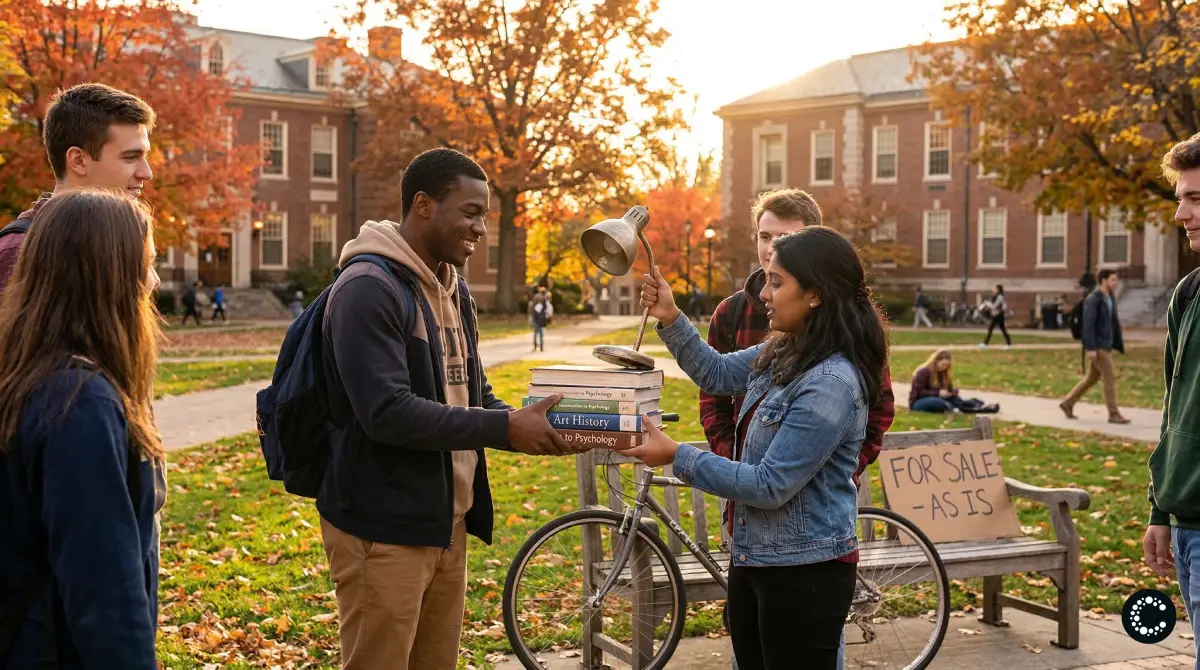
If you have ever tried to buy a used textbook through your university's Facebook buy-sell group, you know the drill. You scroll past dozens of irrelevant posts — someone promoting their SoundCloud, a sublease listing from three months ago that nobody took down, a heated argument about parking — before you finally spot a calculus textbook. You message the seller. No response. You message again two days later. They sold it yesterday but never updated the post. Meanwhile, you paid full price at the campus bookstore because the semester started and you could not wait any longer.
This experience is so universal among college students that it has become a running joke. But the underlying problem is serious. Students waste real money and real time navigating chaotic, unmoderated Facebook groups that were never designed for buying and selling. And increasingly, they are looking for something better.
A dedicated campus marketplace — a private, organized platform built specifically for student buying and selling — solves nearly every frustration that Facebook groups create. In this article, we will break down why Facebook groups fail students, what a proper campus marketplace looks like, and how you can set one up for your university.
The Current State: Facebook Groups Are the Default (and It Shows)
Almost every college and university in North America has at least one Facebook buy-sell group. Many have several — one for textbooks, one for furniture, one for subletting, and a general "free and for sale" group that tries to be everything at once.
These groups emerged organically because students needed a way to sell to each other, and Facebook was where everyone already had an account. For a while, it worked well enough. But as groups grew to thousands of members and Facebook's algorithm and interface evolved in ways that prioritize engagement over utility, the experience degraded significantly.
Today, most university Facebook buy-sell groups share a set of common problems that make them frustrating for buyers and sellers alike.
Why Facebook Groups Fail as a Student Marketplace
No Search, No Organization
Facebook groups are essentially a reverse-chronological feed of posts. There is no way to filter by category, price range, or item condition. If you want a specific textbook, you have to scroll through every post manually or hope the search function (which searches post text, not structured data) returns something useful. It rarely does.
Compare that to a dedicated college buy and sell app where items are categorized, tagged, and searchable by keyword. The difference is the difference between browsing a well-organized store and rummaging through a pile of unsorted donations.
Spam and Off-Campus Sellers
Moderation in Facebook groups is typically handled by student volunteers who are also juggling coursework, jobs, and social lives. The result is inconsistent enforcement at best. Spam posts — promotions for local businesses, pyramid scheme pitches, external marketplace links — accumulate and clutter the feed.
Worse, many university Facebook groups are technically open to anyone who requests to join. Off-campus sellers, local resellers, and even scammers can infiltrate the group. Students end up interacting with strangers who have no connection to the campus community, which undermines the trust that makes peer-to-peer selling work.
Ghost Listings and No Accountability
There is no mechanism in a Facebook group to mark an item as sold. Listings from weeks or months ago sit alongside fresh posts, and there is no way to tell which items are still available without messaging the seller and waiting (and waiting) for a response.
Because Facebook accounts are loosely verified at best, there is also limited accountability. A seller who flakes on a meetup or misrepresents an item faces no consequences — they can simply ignore messages and move on. In a campus-scoped marketplace where everyone is a verified student, social accountability naturally keeps behavior in check.
Facebook Itself Is the Problem
Here is a factor that often goes unmentioned: a growing number of college students simply do not use Facebook. Studies consistently show declining Facebook usage among 18-to-24-year-olds. Many students created accounts years ago and rarely log in. Others never created one at all.
Requiring students to use Facebook as their primary platform for campus commerce excludes a meaningful portion of the student body. A dedicated campus marketplace that works on any mobile browser, without requiring a Facebook account, is inherently more accessible.
The Mobile Experience Is Poor
Facebook groups were designed for desktop browsing and have been awkwardly adapted for mobile. Viewing images, scrolling through posts, and sending messages through the Facebook app is clunky compared to a purpose-built mobile experience. Given that the vast majority of student browsing happens on phones, this matters enormously.
A modern student marketplace is mobile-first by design, with fast loading, clean layouts, and intuitive navigation optimized for the way students actually use their devices.
What Students Actually Buy and Sell
Understanding what moves through a campus marketplace helps explain why a dedicated platform matters. The volume and variety of student transactions is substantial.
Textbooks and Course Materials
This is the single largest category in any university marketplace. Textbook prices have increased over 1,000% since 1977, far outpacing inflation. Students are financially motivated to buy used and sell when they are done. A campus marketplace connects buyers and sellers within the same university, which means course-specific editions and supplementary materials are more likely to match.
A student finishing Organic Chemistry can list their textbook, model kit, and study guides as a bundle. An incoming student taking the same course next semester finds exactly what they need, at a fraction of the bookstore price, from someone who just completed the class and can even offer advice on which materials were most useful.
Dorm and Apartment Furniture
Every May and August, campuses experience a massive churn of furniture. Graduating seniors and students moving off campus need to offload desks, chairs, shelving units, mini-fridges, and futons. Incoming students and those moving into new apartments need exactly those items.
The timing alignment is perfect, but without an organized marketplace, these transactions happen through frantic last-minute Facebook posts, physical bulletin boards, and literal piles of furniture left on curbs. A dedicated campus marketplace lets students list items weeks in advance, browse by category, and arrange pickups at convenient times.
Electronics and Tech
Laptops, tablets, monitors, headphones, phone cases, chargers, and gaming equipment circulate actively among students. A student upgrading to a new laptop can sell their previous one to a classmate at a fair price, and the buyer benefits from purchasing a device that has been used in the same academic environment, often with relevant software already installed.
Clothing and Event Items
Formal wear for Greek life events, career fairs, and campus galas. Sports equipment and athletic gear. Winter coats and cold-weather accessories, especially valuable at universities where students arrive from warmer climates unprepared for their first winter.
Move-Out Season Items
This deserves its own category because of the sheer volume. At the end of every academic year, students discard enormous quantities of usable items. Cleaning supplies, kitchen equipment, bedding, storage containers, and decorations all find their way to dumpsters. A campus marketplace redirects these items to students who can use them, reducing waste and saving money for everyone involved.
The Benefits of a Dedicated Campus Marketplace
Trust Through Community Scoping
The single biggest advantage of a campus marketplace over Facebook groups, Craigslist, or general platforms like Facebook Marketplace is trust. When every user is a verified member of the same university community, the social dynamics change fundamentally.
Sellers are more honest about item condition because they might run into the buyer in class next week. Buyers are more likely to follow through on commitments because their reputation within the campus community matters. Scams are virtually nonexistent because anonymity is not an option.
This community-scoped trust is something that no general marketplace can replicate. It is also the reason that campus buying and selling works better as a private, closed marketplace rather than a public one.
Real Organization and Searchability
A proper university marketplace lets students search by keyword, browse by category, filter by price, and sort by date. A student looking for an Intro to Psychology textbook can find every available copy in seconds, compare prices, and message the seller — all within a single, clean interface.
This organization also benefits sellers. A well-categorized listing with a clear photo and description sells faster than a Facebook post that gets buried within hours. On platforms like Cirkle, the AI listing generator takes this a step further: a student can upload a photo of their textbook and have a complete listing generated automatically, with the title, description, suggested price, and relevant tags filled in. The entire process takes less than a minute.
Mobile-First Experience
Students live on their phones. A campus marketplace needs to work flawlessly on mobile, with fast load times, intuitive navigation, and an interface that feels native to the way students browse and communicate.
Cirkle is built mobile-first, meaning the experience on a phone is not a compromise — it is the primary design target. Students can snap a photo, create a listing, browse available items, and message sellers without ever switching to a desktop.
No Fees Eating Into Already-Tight Budgets
College students are, as a demographic, operating on thin financial margins. Every dollar matters. Platforms that charge fees or commissions on transactions are effectively taxing a population that can least afford it.
Cirkle charges zero fees and zero commissions. When a student sells a textbook for $40, they keep $40. When a student buys a mini-fridge for $50, they pay $50. The simplicity of this model matters — students should not have to calculate platform fees into their pricing or wonder whether the final cost includes hidden charges.
How to Set Up a Campus Marketplace for Your University
Identify Your Champions
Every successful campus marketplace starts with a small group of committed people. The ideal champions are students who are well-connected, organized, and motivated by either the practical benefits (saving money, reducing waste) or the community-building aspect.
Good places to find champions include student government, residence hall advisors (RAs), sustainability clubs, and campus organizations with large, active memberships. These groups already have communication channels and credibility with the broader student body.
Create the Marketplace
With Cirkle, creating a campus marketplace takes minutes. Here is the practical process:
- Visit heycirkle.com and create a marketplace. For a campus context, a private marketplace or moderated marketplace works best. Private ensures only verified students can access it. Moderated allows open access but gives administrators control over listings.
- Name the marketplace clearly — something like "State University Marketplace" or "Westfield College Buy/Sell/Trade" that students will immediately recognize.
- Set up basic categories: Textbooks, Furniture, Electronics, Clothing, Free Items, and a general Other category.
- Invite your initial group of champions to join and seed the marketplace with their own listings.
The AI listing generator is a significant advantage during the launch phase. When students see that creating a listing requires nothing more than uploading a photo from their phone, adoption barriers drop to nearly zero.
Get Institutional Support
While a campus marketplace can run entirely as a student initiative, institutional support accelerates adoption significantly. Here is how to approach different campus stakeholders.
Student Government: Frame the marketplace as a student service that saves money and reduces waste. Student government can promote it through official channels, include it in orientation materials, and potentially allocate a small budget for launch promotion.
Residence Life and RAs: RAs are perfectly positioned to promote a campus marketplace because they interact with students during the exact moments when buying and selling is most relevant — move-in, move-out, and room transitions. Ask Residence Life to include marketplace information in RA training and move-in packets.
Sustainability Office: Most universities have sustainability offices or committees that are actively looking for measurable initiatives to support. A campus marketplace that diverts items from landfills is a perfect fit. These offices can provide promotional support, include the marketplace in sustainability programming, and track impact metrics.
Campus Communications: University newsletters, social media accounts, and digital signage can all drive awareness. A single mention in a campus-wide email during move-in week can generate hundreds of signups.
Time Your Launch Strategically
Timing matters enormously for a campus marketplace. The two highest-impact windows are:
Late August / Early September (Fall Move-In): Incoming students need everything — furniture, textbooks, supplies, decorations. Returning students who spent the summer abroad or at home are re-establishing their living spaces. Demand is at its peak.
Late April / May (Spring Move-Out): Graduating seniors and students leaving for the summer are liquidating. Furniture, textbooks, kitchen equipment, and decor flood the market. Students staying for the summer or returning in the fall are the natural buyers.
Launching two to three weeks before either of these windows gives you time to build initial listings and awareness before peak demand hits.
Promote Effectively
The most effective promotion strategies for a campus marketplace are peer-driven and specific.
- Dorm bulletin boards and common areas — physical flyers still work on college campuses, especially in laundry rooms and communal kitchens.
- Class-specific channels — a message in a GroupMe or Discord for a large lecture class mentioning that textbooks are available on the campus marketplace is highly targeted and effective.
- Social media takeovers — partnering with popular campus Instagram accounts or student organization social media for a day of promotion.
- Move-in day presence — setting up an informal table or having RAs mention the marketplace during floor meetings.
Moderate Lightly but Consistently
A campus marketplace generally requires less moderation than a public platform because the community is self-selecting. However, basic moderation ensures quality remains high.
Assign two to three student moderators who can review flagged listings, remove inappropriate content, and answer questions from new users. On Cirkle, moderated marketplaces provide built-in tools for this, so moderators do not need technical skills — they simply approve or remove listings as needed.
Establish a few simple rules: no prohibited items, honest descriptions, mark items as sold when they are no longer available, and be responsive to messages. Post these in the marketplace description where every member can see them.
Real-World Scenarios
Scenario: The Textbook Exchange That Saved Students Thousands
A student government at a mid-sized state university launches a Cirkle marketplace specifically for textbook exchange at the start of fall semester. Within the first week, 85 textbooks are listed across 40 different courses. Students buying through the marketplace save an average of 60% compared to bookstore prices. By the end of the semester, over 300 textbooks have changed hands, with a combined savings estimated at over $12,000 for participating students.
The marketplace becomes self-sustaining: students who bought textbooks at the beginning of the semester list them at the end, creating a cycle that benefits every subsequent class.
Scenario: The Move-Out Furniture Rescue
At a large university in the northeast, the sustainability office partners with student volunteers to launch a campus marketplace three weeks before spring move-out. The goal is to reduce the volume of usable furniture that ends up in dumpsters every May.
Students list futons, desks, shelving units, mini-fridges, and kitchen supplies. Incoming transfer students and students moving into off-campus apartments for the first time are the primary buyers. Over 200 items are exchanged in a three-week period, and the facilities team reports a noticeable reduction in move-out waste for the first time in years.
Scenario: The International Student Welcome Market
An international student association creates a Cirkle marketplace specifically for international students arriving at a large research university. Arriving students, many of whom are furnishing an apartment from scratch in a new country, find affordable essentials listed by departing international students who face the same challenge in reverse — needing to sell everything before their visa ends.
Winter clothing, kitchen equipment, bedding, and small appliances are the most popular categories. The marketplace becomes a key part of the association's welcome programming, with senior students listing items and offering campus advice in the same conversations.
Beyond Textbooks: Building Campus Community
The transactional benefits of a campus marketplace — saving money, reducing waste — are significant on their own. But the community benefits are what make a campus marketplace truly valuable over time.
Students who buy and sell from each other form connections they would not otherwise make. A sophomore selling a guitar to a freshman sparks a conversation about the campus music scene. A graduate student giving away moving boxes connects with an incoming student in the same department. These small interactions weave a tighter social fabric across campus.
For universities struggling with student isolation, loneliness, and disconnection — problems that have intensified in recent years — a campus marketplace offers a low-pressure, practical reason for students to interact with each other outside their immediate social circles.
Getting Started Today
You do not need a budget, institutional approval, or technical skills to launch a campus marketplace. A single motivated student can create a marketplace on Cirkle in minutes, invite friends and classmates, and start building momentum.
The platform is free — zero fees, zero commissions. The AI listing generator makes it effortless to create polished listings from a phone. And the mobile-first design means students can browse, list, and buy between classes without missing a beat.
If you are a student, an RA, a student government representative, or a sustainability advocate, you have everything you need to get started right now. Create your campus marketplace on Cirkle and give your university community a better way to buy, sell, and trade.
Want to learn more about how community marketplaces work? Visit our FAQ, explore more stories on our blog, or reach out to our team with questions. We are here to help you build something your campus will actually use.