What Is a Community Marketplace? The Complete Guide
Learn what a community marketplace is, how it differs from general platforms like Facebook Marketplace and Craigslist, and how to create one for your community.
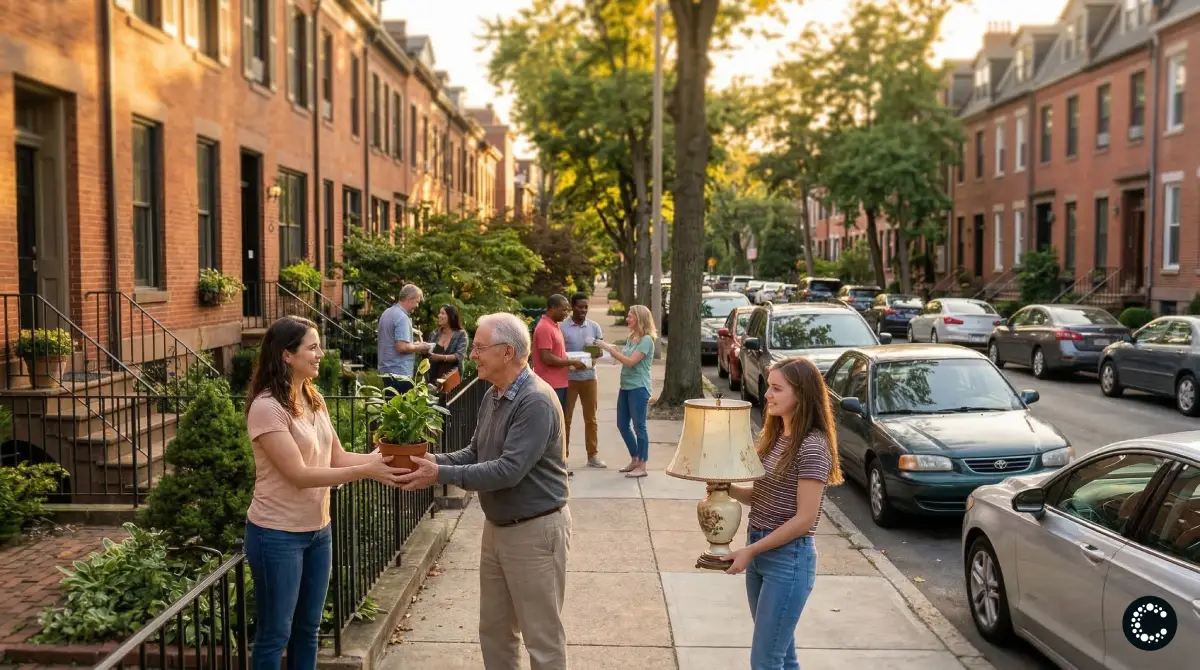
If you have ever tried to sell something online, you know the drill. You list an item on a massive platform, cross your fingers, and wait for a stranger to respond. Maybe you get a lowball offer. Maybe a no-show. Maybe something worse. The experience leaves a lot to be desired, and it raises a fundamental question: why are we trading with millions of anonymous strangers when most of the best transactions happen between people who already share something in common?
That question is exactly what community marketplaces were built to answer. In this complete guide, we will break down what a community marketplace is, how it differs from the platforms you already know, why it matters for trust and safety, and how you can create one for your own community in a matter of minutes.
What Is a Community Marketplace?
A community marketplace is a buying-and-selling platform that is scoped to a specific group of people who share a common bond. That bond might be a physical location, like an apartment building or a neighborhood. It might be an organization, like a university or a company. Or it might be a shared interest, like a running club, a parenting group, or a vintage audio community.
Unlike open platforms where anyone on the internet can participate, a community marketplace limits participation to verified members of the group. This single constraint changes everything: the quality of listings goes up, the risk of fraud goes down, and the overall experience feels less like shouting into the void and more like posting on a trusted bulletin board.
Think of it this way. A general marketplace is a crowded flea market in a city you have never visited. A community marketplace is the swap table at your local co-op, where you recognize faces and reputations travel by word of mouth.
How Community Marketplaces Differ from General Platforms
To understand the value of a community marketplace, it helps to compare it against the platforms most people use today.
Facebook Marketplace
Facebook Marketplace piggybacks on the social network's massive user base. That scale is both its greatest strength and its biggest weakness. You can reach millions of people, but you also expose yourself to millions of strangers. Scams, no-shows, and uncomfortable meetups are common complaints. There is no real vetting process, and the algorithm optimizes for engagement rather than relevance. You might be shown a listing from someone 90 miles away simply because it generated clicks.
Craigslist
Craigslist pioneered online classifieds, and it remains popular for its simplicity. But that simplicity comes at a cost. There are no user profiles, no transaction safeguards, and very little accountability. The anonymity that once felt liberating now feels risky. Many users have moved away from Craigslist precisely because there is no trust layer.
Niche Marketplaces (Poshmark, Mercari, OfferUp)
These platforms add features like shipping labels, seller ratings, and in-app payments. They are improvements over Craigslist, but they still operate on an open model. Anyone can join, and trust is built slowly through transactional reputation scores that can be gamed. They also take meaningful fees and commissions, which eat into the value of every sale.
The Community Marketplace Difference
A community marketplace flips the model. Instead of starting with zero trust and building it transaction by transaction, you start with a foundation of trust that already exists. The members of your apartment building already share a physical space. The employees at your company already share an employer. The parents at your school already share a daily routine. That pre-existing trust reduces friction, discourages bad behavior, and makes the entire experience more pleasant.
Here is a quick comparison:
- Audience: General platforms serve everyone. Community marketplaces serve a defined group.
- Trust: General platforms rely on ratings and reviews. Community marketplaces rely on real-world relationships.
- Relevance: General platforms show you everything. Community marketplaces show you what matters to your group.
- Safety: General platforms require meetups with strangers. Community marketplaces facilitate exchanges with neighbors and peers.
- Fees: Many general platforms take commissions of 10 to 20 percent. Community marketplaces like Cirkle charge zero fees and zero commissions.
The Benefits of Community Commerce
Community commerce is the broader concept behind community marketplaces. It describes any economic activity that is rooted in a shared community rather than an anonymous open market. The benefits are significant.
Trust and Safety
When you know who you are buying from, the dynamic changes completely. Sellers are more honest about the condition of items because their reputation within the community is on the line. Buyers are more respectful because they will see the seller again. The accountability that comes from shared membership acts as a natural deterrent against scams, ghosting, and other bad behavior.
Relevance and Convenience
In a community marketplace, listings are inherently relevant. If you live in the same apartment building as the seller, you do not need to coordinate a complicated meetup. You can exchange items in the lobby or the parking garage. If you work at the same company, you can handle the handoff during lunch. The logistics are simpler because the community provides a built-in infrastructure for exchange.
Sustainability
Community marketplaces encourage reuse and reduce waste. Instead of throwing away a perfectly good piece of furniture when you move, you list it for your building's marketplace and someone three floors up buys it that afternoon. Instead of ordering a new drill online, you buy one from a neighbor who barely used theirs. The environmental benefit of keeping goods circulating within a community is substantial.
Economic Empowerment
When a platform charges zero fees and zero commissions, every dollar of a sale goes directly to the seller. This matters especially for casual sellers who are not running a business. If you sell a $50 item on a platform that takes 15 percent, you lose $7.50. In a community marketplace with no fees, you keep the full $50. Multiply that across dozens of transactions and the savings add up.
Stronger Communities
Commerce creates connection. When neighbors trade with each other, they build relationships that extend beyond the transaction. The person who bought your bookshelf becomes the person you wave to in the hallway. The colleague who sold you a monitor stand becomes a lunch companion. Community marketplaces do not just move goods; they weave social fabric.
Types of Communities That Use Marketplaces
One of the most powerful aspects of community marketplaces is their versatility. Nearly any group of people with a shared identity can benefit from one.
Apartment Buildings and Condominiums
Residents in multi-unit buildings are constantly buying and selling furniture, appliances, and household items. A community marketplace lets them do it without leaving the building. Move-in and move-out seasons become swap events rather than trips to the dumpster.
Neighborhoods and HOAs
Neighborhood marketplaces extend the concept to a geographic area. Residents can sell yard equipment, kids' clothing, sports gear, and more to people who live within walking distance. HOAs can use the marketplace to manage community resources like shared tools or event tickets.
Universities and Colleges
Students are a natural fit for community marketplaces. Every semester brings a wave of textbook sales, furniture swaps, and electronics trades. A university-scoped marketplace ensures that buyers and sellers are fellow students, which increases trust and simplifies logistics on campus.
Companies and Workplaces
Corporate marketplaces let employees buy and sell among colleagues. This is especially popular in large organizations where employees may not know everyone but share a common employer and workplace culture. Companies can also use the marketplace for surplus equipment, swag, and internal resource sharing.
Hobby and Interest Groups
Running clubs, book clubs, photography groups, gaming communities, and countless other interest-based groups can benefit from a marketplace tailored to their niche. A cycling club marketplace filled with bike parts and gear is infinitely more useful to its members than a general platform cluttered with irrelevant listings.
Parent and School Communities
Parent groups, PTAs, and school communities use marketplaces to trade kids' clothing, toys, school supplies, and sports equipment. Because the families already know each other, the trust level is high and exchanges are convenient.
How to Create a Community Marketplace
Setting up a community marketplace used to require technical expertise, significant investment, and months of development. That is no longer the case. Modern platforms like Cirkle let you create a fully functional marketplace in minutes, with no coding, no fees, and no complexity.
Step 1: Choose Your Marketplace Type
Different communities have different needs, and your marketplace type should reflect that. Cirkle offers five distinct types:
- Personal: A marketplace just for you, ideal for managing your own listings across multiple communities.
- Public: Open to anyone who finds it. Great for neighborhoods, local interest groups, or open communities.
- Moderated: Anyone can request to join, but a moderator approves members. This adds a trust layer while keeping the door open.
- Private: Invite-only. Perfect for apartment buildings, companies, or any group that wants to keep membership tightly controlled.
- Enterprise: Designed for organizations that need advanced features, branding, and administrative controls.
Step 2: Invite Your Community
Once your marketplace is set up, invite your community members. Share a link via email, group chat, or social media. For private marketplaces, send direct invitations to ensure only the right people gain access.
Step 3: Start Listing
This is where the experience really shines. With Cirkle's AI listing generator, creating a listing takes seconds rather than minutes. Simply upload a photo of your item and the AI automatically generates a title, description, suggested price, and relevant tags. You can edit any of these details, but most users find that the AI gets it right on the first try.
Step 4: Buy, Sell, and Connect
With your marketplace live and your community onboard, transactions happen naturally. Sellers list items they no longer need. Buyers find things they want from people they trust. The exchange happens in person, in a location that is convenient for both parties, because they already share a physical or organizational space.
For more details on getting started, visit our FAQ or reach out through our contact page.
Real-World Scenarios
To make this concrete, here are a few scenarios that illustrate how community marketplaces work in practice.
The Apartment Building Swap
Maria is moving out of her apartment at the end of the month. She has a couch, a desk lamp, and a set of kitchen shelves that she does not want to haul to her new place. She opens her building's Cirkle marketplace, snaps a photo of each item, and the AI listing generator creates three polished listings in under two minutes. By the end of the day, two neighbors have claimed items. The exchanges happen in the elevator lobby. No strangers, no shipping, no fees.
The University Textbook Exchange
At the start of the fall semester, Jake needs four textbooks. On the general platforms, he finds copies from sellers across the country, each charging $10 to $15 for shipping. On his university's Cirkle marketplace, he finds three of the four books listed by students on campus. He picks them up between classes and saves over $40 in shipping costs alone. At the end of the semester, he lists those same books for the next wave of students.
The Company Equipment Marketplace
A mid-sized tech company sets up a private Cirkle marketplace for its 300 employees. Within the first month, employees list standing desk converters, monitors, keyboards, office chairs, and even parking passes. The company itself uses the marketplace to distribute surplus equipment from a recent office consolidation. The result: less waste, happier employees, and a sense of internal community that did not exist before.
The Neighborhood Tool Library
A neighborhood association creates a moderated Cirkle marketplace focused on sharing and selling tools. Instead of every household owning a pressure washer, a ladder, and a paint sprayer, residents list these items for sale or short-term loan. The neighborhood saves money collectively, and the marketplace becomes a hub for connecting neighbors who might never have met otherwise.
The Future of Community Commerce
The trajectory of online commerce is moving away from massive, impersonal platforms and toward smaller, trust-based communities. Several trends are accelerating this shift.
The Trust Deficit
Consumer trust in large platforms is declining. High-profile data breaches, rampant scams, and algorithmic manipulation have eroded confidence. People are looking for alternatives that prioritize safety and authenticity over scale.
The Sustainability Movement
As awareness of environmental impact grows, more consumers are choosing to buy secondhand and local. Community marketplaces are the natural infrastructure for this behavior. They make it easy to keep goods in circulation within a defined area, reducing the carbon footprint of shipping and the waste of disposal.
The Rise of AI
Artificial intelligence is making it dramatically easier to participate in commerce. Tasks that used to take ten minutes, like writing a listing description, researching a fair price, and choosing the right category, now take seconds. This lowers the barrier to entry and makes casual selling accessible to everyone. Cirkle's AI listing generator is a prime example of this trend in action, and you can read more about it in our blog.
The Community-First Economy
From co-working spaces to community-supported agriculture, the economy is moving toward models that are rooted in relationships rather than transactions. Community marketplaces are part of this broader shift. They do not just facilitate commerce; they build the connective tissue that holds communities together.
Getting Started with Cirkle
If you have read this far, you probably recognize the value of a community marketplace for your own group. The good news is that getting started is free, fast, and remarkably simple.
Cirkle lets you create a marketplace in minutes. There are no setup fees, no transaction fees, and no commissions. The platform is mobile-first, with a modern interface that feels intuitive from the first tap. The AI listing generator handles the tedious parts of selling, so you can focus on connecting with your community.
Whether you manage an apartment building, lead a neighborhood association, run a university club, or simply want to help your friend group trade and share more effectively, Cirkle gives you the tools to make it happen.
Ready to create your community marketplace? Visit heycirkle.com to get started today. It takes less than five minutes, costs nothing, and could transform the way your community buys, sells, and connects.