Building a Neighborhood Marketplace: A Complete Guide
Learn how to create a neighborhood marketplace where local residents can buy, sell, and trade safely. A complete guide to building hyperlocal community commerce.
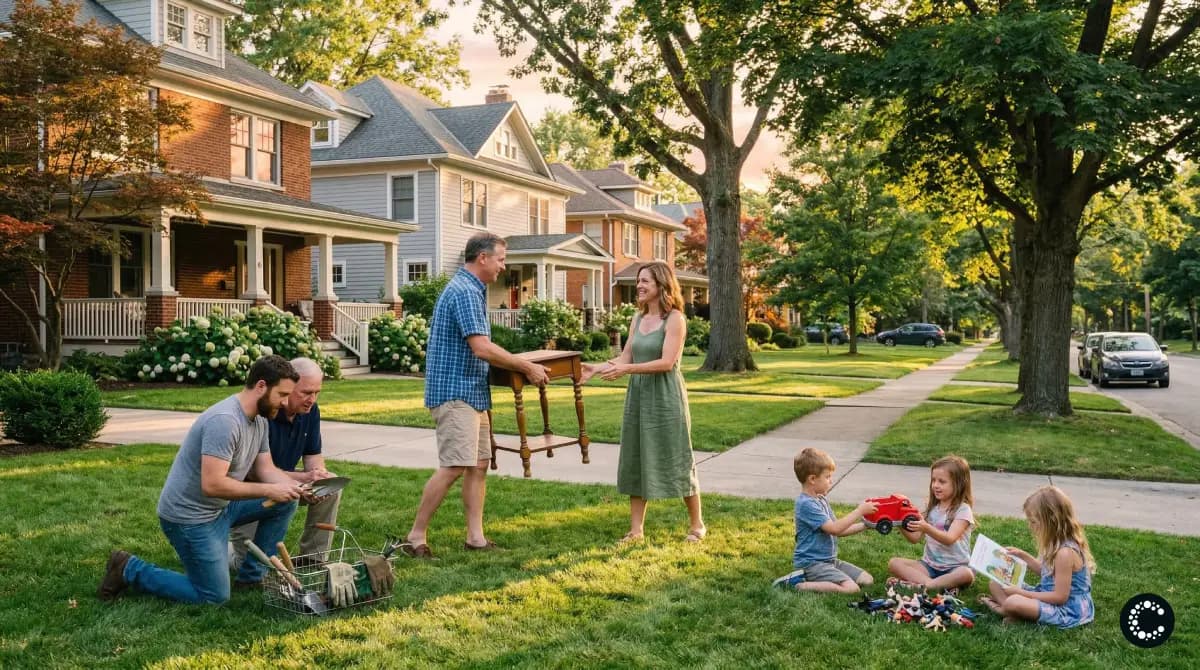
Somewhere in your neighborhood right now, someone is hauling a perfectly good bookshelf to the curb. A few streets over, someone else is searching online for that exact bookshelf, ready to pay for it, and willing to pick it up today. These two people live minutes apart. They might wave at each other on morning walks. But they will never connect because there is no dedicated space for neighbors to buy, sell, and trade with each other.
This is the gap that a neighborhood marketplace fills. Not a city-wide classifieds board drowning in spam. Not a social media group buried under memes and political arguments. A focused, trusted, local marketplace built specifically for the people who live near you.
This guide covers everything you need to know about building a neighborhood marketplace from scratch: why it works, how to set it up, how to get your neighbors on board, and how to keep it thriving over months and years.
What Exactly Is a Neighborhood Marketplace?
A neighborhood marketplace is a dedicated buy-and-sell platform scoped to a specific geographic community. It might serve a single apartment building, a condo complex, a subdivision, a few blocks of row homes, or an entire neighborhood association. The defining characteristic is that every member lives nearby, which fundamentally changes the dynamics of buying and selling.
Unlike a general marketplace where you might be dealing with a stranger across the city, a neighborhood marketplace connects you with people you already share space with. The person selling a stand mixer might be the same person whose dog plays with yours at the park. The buyer interested in your old bicycle might be the family two doors down whose kid just outgrew their training wheels.
This proximity creates three things that general marketplaces struggle to offer: trust, convenience, and community value.
Why Your Neighborhood Needs Its Own Marketplace
You might wonder why existing platforms are not enough. After all, there is no shortage of places to buy and sell things online. But each of the common alternatives has significant limitations when it comes to hyperlocal, community-based commerce.
The Problem with General Platforms
Facebook Marketplace casts a wide net. You list an item and receive inquiries from people across your metropolitan area. Many will message and never follow up. Others will negotiate aggressively because they have no social connection to you. Scams and no-shows are common, and the platform's algorithm buries neighborhood listings in favor of sponsored content and posts from commercial sellers.
Nextdoor is neighborhood-focused in theory, but it is primarily a social network and information board. Its buy-and-sell functionality is a secondary feature, bolted onto a platform designed for posting about lost cats and recommending plumbers. The user experience for commerce is clunky, listings are hard to search, and the feed mixes selling posts with everything else happening in the community.
Craigslist is anonymous by design. There is no concept of community, no trust mechanism, and no moderation to speak of. For many people, the idea of inviting a Craigslist buyer to their home is uncomfortable at best.
Community group chats in WhatsApp, GroupMe, or iMessage start with good intentions but collapse under their own weight. Listings disappear in the message scroll within hours. There is no search, no categorization, and no way to mark items as sold. By the time a group reaches 50 members, the volume of messages makes it unusable for anything.
What a Dedicated Marketplace Solves
A purpose-built neighborhood marketplace eliminates these problems by design. It provides:
- A dedicated space for commerce. No social media noise. No political debates. No algorithm deciding what you see. Just items for sale from people who live nearby.
- Built-in trust. Every member is a verified neighbor. You are not dealing with anonymous strangers. Social accountability keeps behavior honest.
- Searchable, organized listings. Categories, tags, photos, and descriptions make it easy to find what you need.
- Conversation tools. Direct messaging between buyer and seller, without sharing personal phone numbers or email addresses.
- Moderation controls. The marketplace creator can set rules, approve members, and remove inappropriate content.
The Benefits of Hyperlocal Commerce
The advantages of a neighborhood marketplace extend well beyond convenience. They touch on sustainability, economics, and the social fabric of where you live.
Radical Convenience
When your buyer lives three minutes away, transactions become effortless. No coordinating complicated meetups. No driving across town. No shipping costs or packaging. You can literally walk an item to the buyer's porch. This frictionlessness means more items get sold, more items get reused, and less functional stuff ends up in landfills.
Genuine Trust
In a neighborhood marketplace, reputation is organic. You are not relying on star ratings from strangers. You are relying on the fact that this person lives on your street and you will see them at the block party next month. This social proximity creates a powerful incentive for honest dealing that no review system can replicate.
Environmental Impact
Every item sold within your neighborhood is an item that did not get thrown away and replaced with a new one. It is also an item that did not need to be shipped across the country in a cardboard box. Neighborhood commerce is one of the most practical forms of sustainable consumption, and it happens to save everyone money in the process.
Community Building
Something unexpected happens when neighbors start buying and selling with each other. They start talking. They discover shared interests. They learn each other's names. A marketplace transaction becomes the seed of a neighborly relationship. Over time, a neighborhood marketplace does not just move items. It strengthens the community itself.
Keeping Money Local
When you sell a dresser to your neighbor, that money stays in the neighborhood. It is not going to a corporation, a platform fee, or a shipping carrier. It is a direct transfer of value between two people who live near each other. Over the course of a year, the cumulative economic impact of a thriving neighborhood marketplace can be significant.
How to Start a Neighborhood Marketplace
Setting up the marketplace itself is the easy part. With a platform like Cirkle, you can create a fully functional marketplace in under five minutes. Here is the step-by-step process.
Step 1: Choose Your Marketplace Type
Cirkle offers several marketplace types to match your community's needs:
- Private marketplace. Members must be invited or approved. Best for apartment buildings, gated communities, or any group that wants a closed, members-only experience.
- Moderated marketplace. Anyone can request to join, but a moderator approves new members and can review listings before they go live. Ideal for neighborhoods that want openness with oversight.
- Public marketplace. Open for anyone to browse. Good for neighborhoods that want maximum visibility and easy onboarding.
For most neighborhood marketplaces, a private or moderated setup works best. It preserves the trust that comes from knowing everyone in the group while still making it easy for new neighbors to join.
Step 2: Set Up Your Marketplace Profile
Give your marketplace a clear, recognizable name. "Maple Heights Buy & Sell" is better than "Our Marketplace." Add a description that explains who the marketplace is for and what the community guidelines are. Upload a cover photo that represents your neighborhood, whether that is a recognizable landmark, a street view, or even your neighborhood association logo.
Step 3: Establish Ground Rules
Before inviting anyone, decide on a few basic rules. These do not need to be elaborate. A few clear guidelines prevent most problems:
- What types of items are allowed (and what is not, such as weapons, alcohol, or counterfeit goods)
- How pricing should work (firm prices, or is negotiation expected?)
- How transactions should happen (porch pickup, lobby exchange, meeting in a public space)
- A code of conduct for communication (be respectful, respond within 24 hours, honor commitments)
Post these rules in the marketplace description or as a pinned announcement so every new member sees them.
Step 4: Seed the Marketplace with Initial Listings
An empty marketplace is a dead marketplace. Before you invite anyone, create at least five to ten listings of your own. They do not need to be expensive items. A few books, some kitchen gadgets, a piece of wall art, a set of planters. The point is to show new members what the marketplace looks like when it is active and to demonstrate that real items are available.
Cirkle's AI listing generator makes this fast. Snap a photo of each item, upload it, and the AI will generate a title, description, suggested price, and tags automatically. You can review and adjust before posting, but the drafting is done in seconds.
Step 5: Invite Your First Members
Start with people you know personally. Neighbors you are friendly with, members of your HOA board, parents you know from the school bus stop. Aim for 10 to 15 initial members who are likely to be active participants. These early adopters set the tone and culture of the marketplace.
Getting Your Neighbors on Board
This is where most neighborhood marketplaces succeed or fail. The technology is simple. The human challenge of getting people to actually join and participate is where your effort needs to focus.
Start with Your Inner Circle
Identify five to ten neighbors who are natural connectors. People who organize block parties, run the HOA newsletter, or are simply known by everyone on the street. Personally invite them, explain what the marketplace is, and ask them to each create at least one listing. Their participation signals to others that this is worth joining.
Use Physical Outreach
Digital invitations are easy to ignore. Physical presence is harder to dismiss.
- Flyers in common areas. If you live in an apartment building or condo, post a simple flyer in the lobby, mailroom, elevator, or laundry room. Include a QR code that links directly to the marketplace.
- HOA meetings. Request five minutes at the next homeowners association meeting to introduce the marketplace. Bring your phone to show a live demo.
- Neighborhood events. Block parties, yard sales, holiday gatherings, and school events are perfect opportunities to spread the word in person.
- Door-to-door. It feels old-fashioned, but knocking on a few doors with a printed card or flyer is remarkably effective, especially in smaller communities.
Leverage Existing Digital Channels
You can use the same platforms you are trying to replace as a launchpad.
- Nextdoor. Post about your new neighborhood marketplace on Nextdoor. Yes, it is ironic. It is also where your neighbors already are. A post explaining "we created a dedicated marketplace for our neighborhood" with a link to join will reach the right audience.
- Neighborhood group chats. If your building or street has a WhatsApp or GroupMe, share the link there with a brief explanation.
- Community Facebook groups. Post in your local Facebook group. Frame it as a solution to the problems people already complain about: no-shows, scammers, and the hassle of dealing with strangers.
- Email lists. If your HOA or neighborhood association has an email list, ask to include an announcement about the marketplace.
The Critical Mass Moment
A neighborhood marketplace needs about 20 to 30 active members before it starts to sustain itself. Below that threshold, new members check the marketplace, see limited activity, and lose interest. Above it, there is enough inventory and enough buyers to create a self-reinforcing cycle. Your initial outreach should be focused and persistent until you hit that critical mass.
What Sells Well in Neighborhood Marketplaces
Not everything sells equally well in a hyperlocal context. Here are the categories that consistently perform best in neighborhood marketplaces, based on what moves in communities like apartment buildings, subdivisions, and local groups.
Furniture and Home Goods
This is the number one category in nearly every neighborhood marketplace. Furniture is expensive to ship, painful to transport across a city, and perfectly suited to a walkable transaction. Bookshelves, desks, dining tables, dressers, couches, bed frames, and outdoor furniture all sell quickly when the buyer can walk over and see the item in person before committing.
Kids' Items
Children outgrow things at an astonishing rate. Strollers, car seats, clothing, toys, books, sports equipment, and school supplies are in constant rotation. Neighborhood marketplaces are ideal for this because parents can inspect items, ask questions about usage history, and complete the transaction during a playdate or school pickup.
Tools and Equipment
Most people own tools they rarely use. A pressure washer, a tile saw, a lawn aerator, a carpet cleaner. In a neighborhood marketplace, these items find eager buyers who need them for a one-time project. Some neighborhoods even develop informal lending libraries through their marketplace, where tools are loaned rather than sold.
Garden and Outdoor Equipment
Planters, pots, garden tools, patio furniture, grills, lawn mowers, and outdoor decorations have strong seasonal demand. They are also bulky and heavy, making local transactions far more practical than shipping.
Kitchen Appliances and Cookware
Stand mixers, instant pots, blenders, cast iron pans, bakeware sets, and small appliances are perennial sellers. Many of these items are received as gifts, used once or twice, and then stored indefinitely. Your neighbor's unused bread maker could be exactly what someone down the street has been looking for.
Electronics
Tablets, laptops, monitors, gaming consoles, speakers, and headphones move quickly in neighborhood marketplaces. The in-person nature of the transaction lets buyers test the device before paying, which builds confidence and reduces disputes.
Safety and Moderation
A neighborhood marketplace has built-in safety advantages over general platforms, but that does not mean moderation is unnecessary. Thoughtful moderation keeps the community healthy and trustworthy.
Membership Approval
For private or moderated marketplaces, review membership requests before approving them. Verify that the person actually lives in the neighborhood. This can be as simple as asking for their street address or building number during the application process.
Listing Review
If your marketplace is moderated, review listings before they go live. This does not need to be burdensome. Most listings are perfectly fine. You are primarily watching for prohibited items, misleading descriptions, or spam.
Conflict Resolution
Occasionally, a transaction will go sideways. A buyer may claim an item was not as described. A seller may feel lowballed or harassed. As the marketplace administrator, having a simple process for handling disputes is important. Listen to both sides, reference the community guidelines, and make a fair decision. In most cases, the social proximity of the parties resolves things amicably.
Transaction Best Practices
Encourage members to follow safe transaction habits:
- Meet in common areas or on front porches rather than inviting strangers inside
- Complete transactions during daylight hours
- Use digital payment methods for a clear record of the transaction
- Confirm the item's condition at the time of handoff
Managing Growth
A successful neighborhood marketplace will naturally grow as word spreads. Managing that growth intentionally ensures the community remains valuable and trustworthy.
Expanding Geographically
Once your immediate neighborhood marketplace is thriving, you may receive interest from adjacent neighborhoods. You have two options: expand the boundaries of your existing marketplace, or help those neighborhoods create their own. The second option often works better because it preserves the intimacy and trust that comes from a tightly scoped community.
Adding Category Organization
As inventory grows, adding categories helps buyers find what they need. Common categories for neighborhood marketplaces include: furniture, electronics, clothing, kids and baby, tools, kitchen, outdoor, books, free items, and services.
Recruiting Additional Moderators
If the marketplace grows beyond what one person can comfortably manage, recruit one or two trusted members as additional moderators. Look for people who are active in the community, fair-minded, and responsive.
Seasonal Opportunities
A neighborhood marketplace has natural rhythms tied to the calendar. Leaning into these seasonal patterns keeps the marketplace active and relevant year-round.
Spring Cleaning (March through May)
This is the highest-volume season for neighborhood marketplaces. Everyone is clearing out closets, garages, and storage units. Encourage members to do a "spring marketplace purge" and list five to ten items they no longer need. The collective energy of multiple neighbors listing simultaneously creates a surge of activity that attracts even more participation.
Back to School (August through September)
Parents are simultaneously buying and selling: outgrown uniforms, last year's backpacks, textbooks, sports equipment, and dorm essentials. A "back to school marketplace week" can become an annual tradition.
Holiday Season (November through December)
Two dynamics converge during the holidays. People are looking for affordable gifts, and people are making room for new things they expect to receive. Gently used items in good condition make practical gifts, and post-holiday listings of duplicate or unwanted gifts keep the marketplace active into January.
Moving Season (May through September)
Summer is peak moving season. Neighbors who are relocating need to offload furniture, appliances, and household items quickly, often at attractive prices. Meanwhile, new neighbors moving in are looking for exactly those things. A neighborhood marketplace is the most efficient way to connect these two groups.
Measuring Success
How do you know if your neighborhood marketplace is working? A few simple indicators will tell you:
- Active members. Not just total members, but members who have listed, purchased, or messaged in the last 30 days.
- Listing volume. A healthy marketplace has new listings appearing several times a week.
- Transaction completion. Are listed items actually selling? If items sit for weeks without inquiries, the marketplace may need more members or better listing quality.
- Member satisfaction. Periodically ask members how the experience is going. What do they like? What would they improve? This feedback is invaluable.
Start Your Neighborhood Marketplace Today
Building a neighborhood marketplace is one of the most practical things you can do for the place where you live. It saves money, reduces waste, builds relationships, and turns a collection of houses into a connected community.
With Cirkle, you can create your neighborhood marketplace in minutes. Choose a private or moderated setup, invite your nearest neighbors, seed it with a few listings using the AI listing generator, and watch it grow. There are zero fees and zero commissions, so every dollar stays between neighbors.
Ready to get started? Create your free marketplace now and bring your neighborhood closer together. If you have questions along the way, visit our FAQ or reach out to our team. And for more ideas on community commerce, explore the Cirkle blog.